

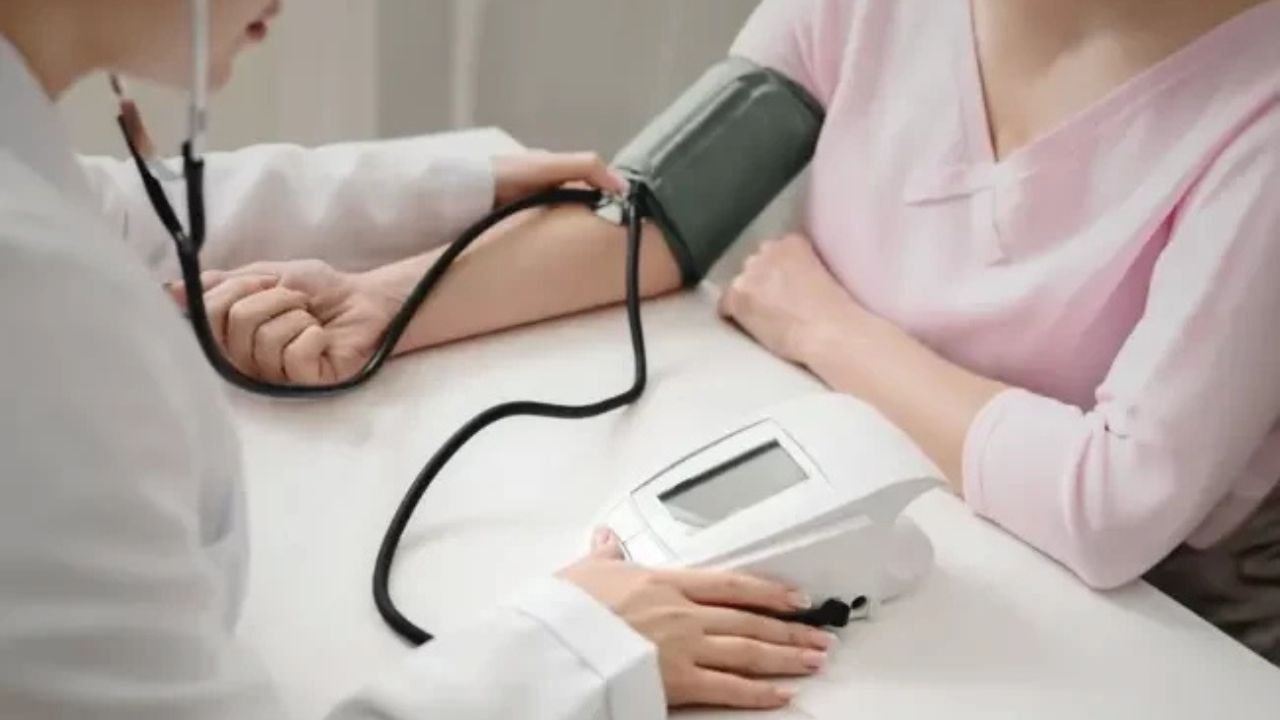
White Coat Hypertension: Imagine you’re sitting in a doctor’s clinic. A nurse checks your blood pressure, and suddenly, the machine shows 150/95. However, when you go home, your blood pressure is 120/80, which means it’s perfectly normal. Have you ever wondered why a patient, or even a healthy person, might experience a spike in blood pressure in front of a doctor? What’s the real reason?
What exactly is this problem?
Let us tell you that a sudden spike in blood pressure in front of a doctor isn’t a miracle, but rather white coat hypertension. This means that the mere sight of a doctor’s white coat makes your blood pressure soar. This problem has become so common these days that 1-2 out of 5 people suffer from it. New research suggests that it’s not just a cause for concern, but can also double the risk of heart disease.
How dangerous is this problem?
A 2024 study by the American Heart Association found that people whose blood pressure spikes in front of a doctor have twice the risk of heart attack than normal individuals. Researchers at Penn Medicine studied over 60,000 patients and revealed that if ignored, it can become a silent killer. According to the ICMR’s 2024 report, over 210 million people suffer from high blood pressure, and 20-30 percent of them are receiving the wrong medication due to white coat hypertension.
Why does this problem occur?
The name of the disease, white coat hypertension, clearly evokes fear of doctors’ white coats, injections, needles, and illness. When we arrive at a clinic or hospital, the mere sight of a doctor’s coat makes our heart beat faster. This causes a sudden spike in blood pressure. This is not a new disease. It was identified in the 1980s, but by 2025, several studies have uncovered the secrets behind it.
This was revealed in a study conducted in Japan
A study was conducted on 153 people in Ohasama, Japan, in 2023. This study, which lasted nearly four years, showed that the effects of this condition are long-lasting and recurrent. If your blood pressure is higher than 140/90 at work, but lower than 130/80 during 24-hour monitoring, it’s white coat hypertension. This condition is more common in women, the elderly, and people under stress.
These tips will help: Now the question arises, how can white coat hypertension be prevented? Let’s explain the steps.
- Check your blood pressure at home twice a day, morning and evening. If your blood pressure remains high at work for three consecutive days, get an ABPM.
- When visiting a doctor, take deep breaths. Sit quietly for five minutes. Listen to music or practice pranayama.
- Reduce salt in your diet. Eat more fruits and vegetables. Walk for 30 minutes daily. Quit smoking and alcohol.