
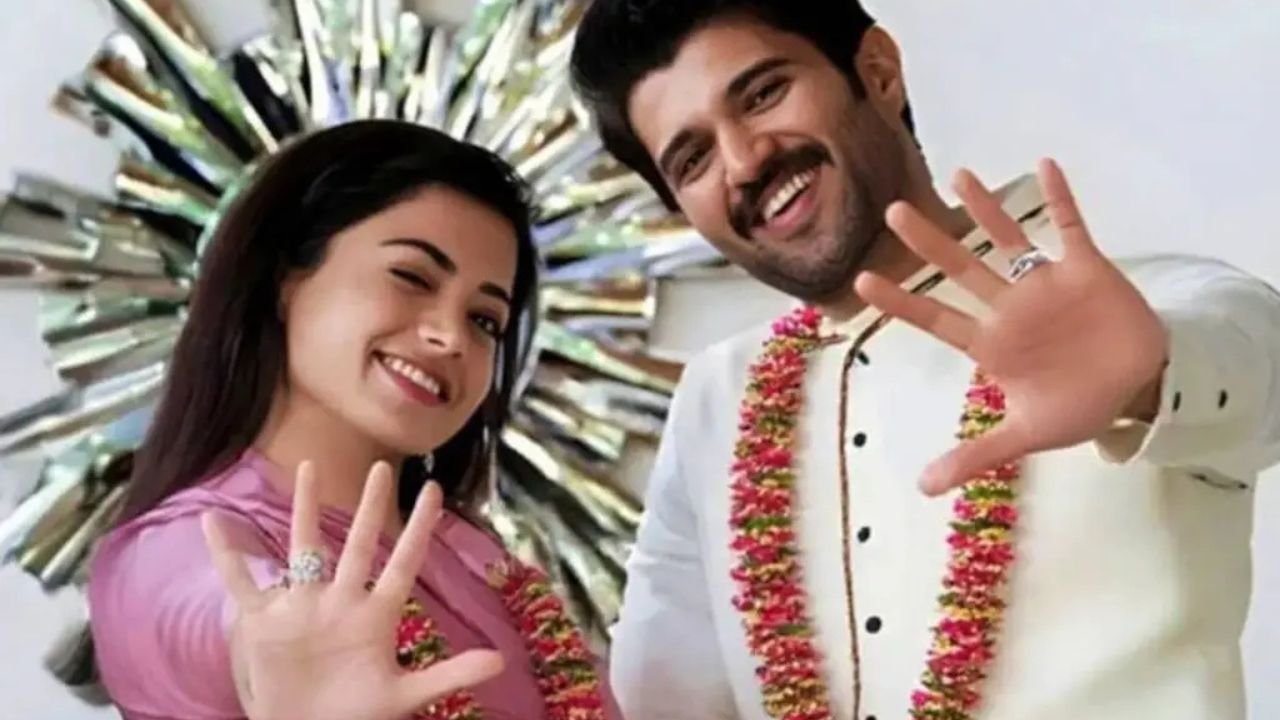
The wedding of Vijay Deverakonda and Rashmika Mandanna is a wonderful example of the diversity of Indian culture. While Vijay comes from a traditional Telugu family, Rashmika belongs to the Kodava community from the Coorg (Kodagu) region of Karnataka. The wedding rituals of these two cultures are so different that this wedding feels like a union of two different worlds. We’re going to tell you what’s special about both weddings, what rituals are involved, and what’s different.
telugu marriage tradition
Vijay Deverakonda’s traditional morning wedding was based entirely on Vedic rituals. The most important moment in Telugu weddings is the Jilakara-Bellam, where the bride and groom place a paste of cumin and jaggery on each other’s heads. This ritual signifies that just as cumin and jaggery combine to create a unique flavor, the couple will also unite through life’s joys and sorrows. This was followed by the Talambralu ritual, in which the couple showered each other with turmeric-laced rice and pearls, symbolizing laughter and happiness. Telugu weddings are characterized by chanting of mantras and a sattvik meal, with fire as the witness.
Kodava marriage tradition
Rashmika’s evening “Kodava” wedding (Kodagu tradition) is completely different from North Indian or Telugu weddings. The most distinctive feature of this community is that they don’t require a priest or fire rituals. It is entirely based on the blessings of elders and warrior traditions. A highlight of Rashmika’s wedding will be the “Bale Birudu” ritual, where the groom demonstrates his strength and skill by cutting banana stems with a single stroke using a traditional sword (Piche Katti). Furthermore, rituals like the Ganga Puja welcome the bride into her new family, reflecting their respect for water and nature.
The difference between Telugu and Kodava weddings isn’t just a matter of language or region, but rather a confluence of two completely different life philosophies. The key differences can be understood in the following points:
Religious versus social structure
Telugu weddings are strictly Vedic and religious. Agni (Homam), Saptapadi, and the presence of a Brahmin priest are mandatory. Each ritual is accompanied by a Sanskrit mantra. In contrast, Kodava weddings are a purely social and familial ceremony. Nature and ancestors are considered witnesses. In the Kodava community, elders of the family act as “gurus” (gurus) and exchange hands between the couples. The absence of any Vedic chanting makes this tradition one of the most unique marriage practices in India.
The difference in food and drink at these two weddings is a major topic of discussion. Telugu weddings are traditionally strictly vegetarian, with sattvik food served on banana leaves. In Kodava culture, however, meat and alcohol are not forbidden; rather, they are an essential part of the celebration. ‘Pandi curry’ (crispy pork) is considered the most prominent dish at Kodava weddings. Harmonizing these two flavors at Rashmika and Vijay’s wedding must have been a major challenge and highlight for the chefs.
Unique style of clothing and makeup
There is a stark difference in the attire of the bride and groom as well. In a Telugu wedding, the groom usually wears a silk dhoti and Kandhuva (undergarment), while the bride is adorned in a Kanjeevaram silk saree. In a Kodava wedding, Rashmika will wear a ‘Kodava style’ saree, in which the pallu is brought behind the shoulder and the pleats are at the back. Vijay will be seen dressed like a warrior in a ‘kuppiya’ (a long black coat) and ‘chele’ (waistband), the traditional attire of Kodava men, for the evening ceremony.
Sword vs Mangalsutra
While the most emotional moments in a Telugu wedding are the wearing of the ‘Mangalsutra’ and ‘Mattelu’ (toe ring), the worship and display of weapons are significant in a Kodava wedding. The Kodava groom ties a ‘Piche Katti’ (short sword) around his waist. While the Telugu tradition is more about peace and devotion, the Kodava rituals reflect a military pride and valor. Vijay and Rashmika have embraced these two contrasting yet beautiful traditions, sending the message that love transcends any cultural barrier.