
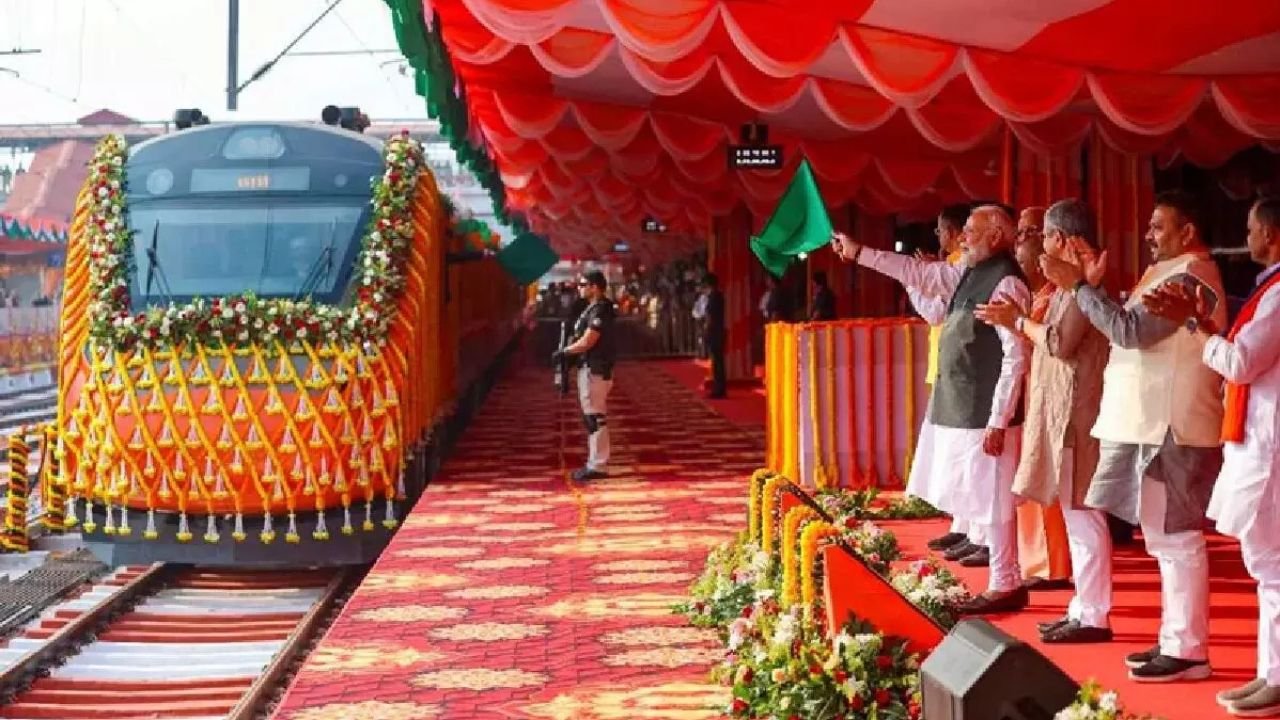
PM Narendra Modi flagged off the country’s first Vande Bharat sleeper train on January 17. This train will run between Howrah and Guwahati (Kamakhya), and its regular service will begin on January 18. It will provide a new option for fast, safe, and comfortable travel for long-distance passengers.
The Vande Bharat sleeper train will run daily between Howrah and Kamakhya. It features sleeper coaches along with AC First Class, AC Second Class, and AC Third Class coaches, offering passengers a choice of amenities to suit their needs.
Interior Inspired by Indian Culture
The train’s interior design is inspired by Indian culture. The coaches feature modern amenities, improved lighting, and a comfortable layout to ensure passenger comfort during long journeys.
Advanced Safety Systems
Prioritizing passenger safety, the train is equipped with the ‘Kavach’ automatic train protection system. It also includes emergency talk-back units, a modern control system in the driver’s cabin, and enhanced surveillance systems.
New Technology for Cleanliness
Special disinfectant technology is used to maintain cleanliness on the train. This ensures a clean and safe environment inside the coaches. The Vande Bharat sleeper train’s exterior design allows it to cut through the air with minimal resistance, enabling high-speed travel. Its doors are automatic, opening and closing as needed.
#WATCH | Malda, West Bengal: PM Narendra Modi flags off India’s first Vande Bharat Sleeper Train between Howrah and Guwahati (Kamakhya)
(Source: DD) pic.twitter.com/lQkE5g6gCa
— ANI (@ANI) January 17, 2026
Flagged Off in Malda
Prime Minister Narendra Modi arrived in Malda, West Bengal, at approximately 12:45 PM on January 17. From Malda Town Railway Station, he flagged off the Howrah-Guwahati Vande Bharat sleeper train.
Launching Major Project in Assam
On January 18, Prime Minister Modi will arrive in Kaliabor, Nagaon district, Assam. There, he will perform the groundbreaking ceremony for the Kaziranga Elevated Corridor Project, a project costing approximately ₹6,950 crore. The 86-kilometer-long Kaziranga Elevated Corridor is an environmentally sensitive national highway project. This project includes a 35-kilometer elevated wildlife corridor that will pass through Kaziranga National Park. In addition, a 21-kilometer bypass will be constructed, and the existing section of NH-715 will be upgraded from two lanes to four lanes.