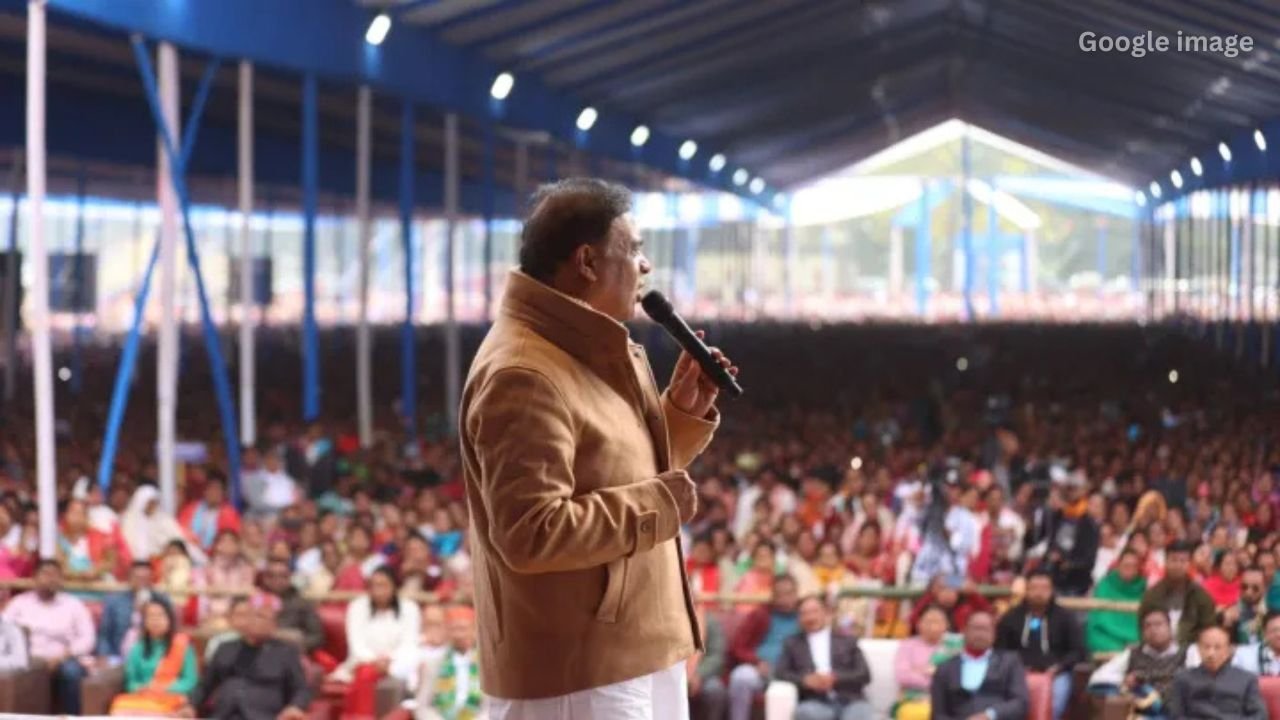
As Assam heads into a crucial Assembly election, the political persona of Chief Minister Himanta Biswa Sarma continues to draw attention for its blend of accessibility, populism, and strong rhetoric. At a recent rally in Dimoria, Kamrup district, Sarma was seen engaging in a highly animated interaction with supporters, dancing and interacting to campaign slogans and music alongside attendees. For many supporters, this style reinforces his image as a leader who is approachable and closely connected to the public. Admirers often describe him as a familial figure, referring to him as “dada” or “mama,” reflecting a cultivated persona that resonates particularly in rural and semi-urban constituencies. This personal connect has become a key element of his political appeal, complementing welfare promises and campaign messaging aimed at women, youth, and grassroots voters.
Political Rhetoric, Welfare Promises, and Electoral Narrative
At the same rally, Sarma combined populist engagement with sharp political rhetoric, making statements targeting what he described as demographic and identity-related concerns in the state. Alongside such remarks, he also promised tangible welfare benefits, including subsidized essentials, increased financial support under government schemes, and employment opportunities for the youth. His messaging often intertwines development assurances with strong positioning on social and political issues, creating a dual narrative that appeals to different voter segments. As elections approach on April 9, both the Bharatiya Janata Party (BJP) and opposition parties have increasingly framed the contest around a central question of leadership style and governance direction. The campaign atmosphere reflects a polarized choice for voters, where support or rejection of Sarma’s leadership becomes a defining electoral theme.
Political Journey Marked by Strategy, Transitions, and Growth
Sarma’s political journey spans over four decades and is marked by strategic shifts, alliances, and steady upward mobility. Beginning his involvement in student politics during his early years, he quickly established himself as a capable organizer within the All Assam Students’ Union (AASU). His early political activities demonstrated a strong understanding of grassroots mobilization and organizational dynamics, traits that would define his later career. Over time, he transitioned from student leadership into mainstream politics, aligning with the Indian National Congress and rising to become a prominent figure within the party. His ability to navigate internal party structures and build influence positioned him as a key power center during the tenure of then Chief Minister Tarun Gogoi, under whom he served in multiple ministerial roles across important departments.
Rise, Defection, and Consolidation of Power in Assam Politics
Sarma’s political trajectory took a decisive turn in the mid-2010s when he parted ways with the Congress and played a crucial role in strengthening the BJP’s presence in Assam. This shift ultimately contributed to the formation of the first BJP-led government in the state in 2016. Since then, he has remained a central figure in Assam politics, known for his administrative acumen, strategic planning, and ability to manage both political alliances and governance responsibilities. His tenure has been marked by both praise for efficient governance and criticism for polarizing rhetoric. As the BJP seeks another term in power, Sarma’s leadership style, administrative record, and political messaging continue to be at the forefront of the electoral debate, making him one of the most influential and closely watched political figures in the region.