
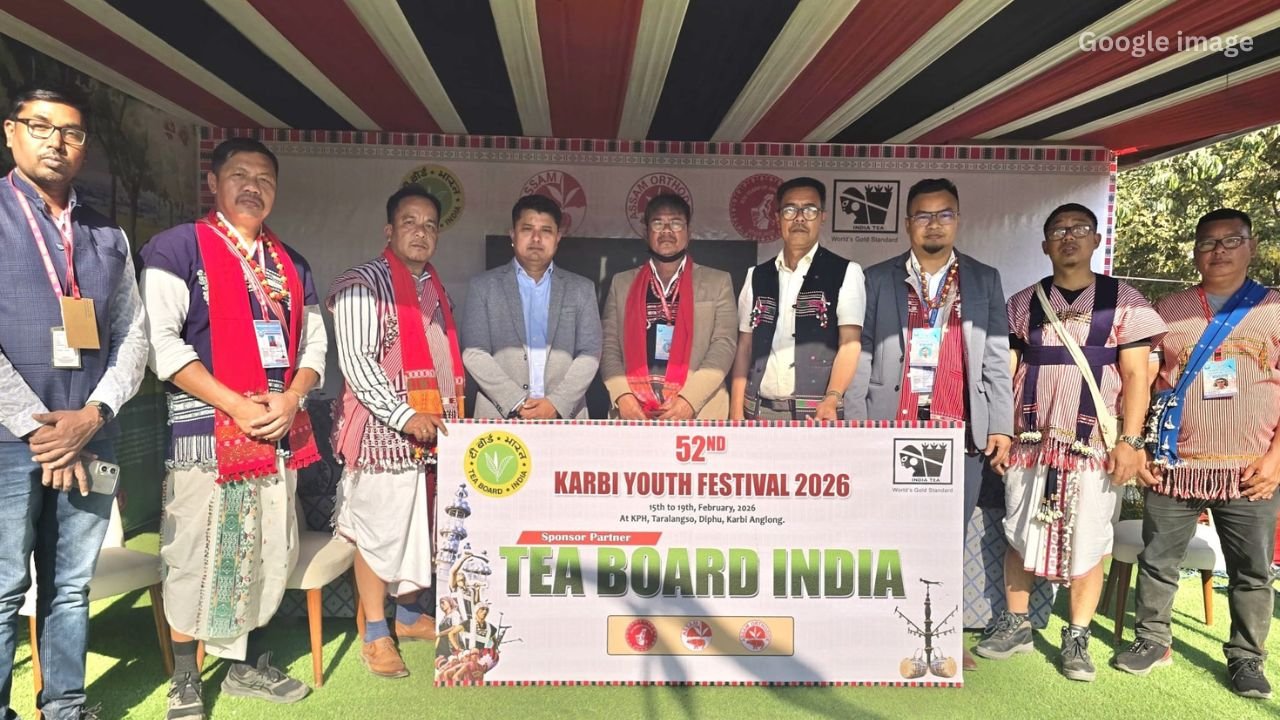
Assam: In February 2026, the 52nd Karbi Youth Festival in Taralangso showcased more than just music and cultural performances. Alongside the vibrant celebrations, the Tea Board of India stall quietly highlighted a transformative story — rural women moving from raw leaf suppliers to producers of finished, premium tea. Visitors were drawn to the stall initially out of curiosity but left with admiration for the quality and uniqueness of the teas. Many recognized the deeper significance: women stepping forward as entrepreneurs and communities building their own sustainable industries. For some, the tea itself became the most memorable part of the festival, symbolizing both economic empowerment and cultural pride.
From Raw Leaves to Market-Ready Products
The initiative reflects a structural shift in Assam’s tea sector, moving beyond traditional supply chains. Rural women now retain control over branding, production, and marketing, creating higher margins and stronger bargaining power. The shift from selling raw leaves to finished products allows these producers to negotiate on merit rather than relying on intermediaries. Institutional engagement, such as recognition by the Tea Board of India, reinforces this growth. Officials emphasized that demand for single-origin, traceable Assam tea reflects market logic rather than sentiment. This transition is not just economic; it transforms perceptions, positioning women as active entrepreneurs rather than passive beneficiaries of development programs.
Technical Capacity and Institutional Support
A few weeks before the festival, the Tea-RWE State-Level Convention in Deithor further solidified these advancements. Nearly 500 rural women entrepreneurs participated under the Udyamini programme, focusing on practical skills including composting, bio-pesticides, dryer design, packaging, and standard operating procedures. Technical and operational discussions underscored a move from aspiration to structured growth. The convention also included institutional announcements, including plans for a dedicated marketplace in Guwahati and support from NABARD for scaling women-led enterprises. Trade licenses and regulatory guidance for artisan clusters demonstrated that capacity-building efforts were translating into actionable market opportunities.
Culture and Commerce Converge
The Karbi Youth Festival illustrated a unique convergence of cultural identity and entrepreneurial confidence. The Rural Women Entrepreneurship initiative combines traditional values — cooperation, family involvement, and pride in heritage — with market-oriented production. Premium, single-origin teas are now recognized not only for cultural symbolism but for quality and consistency in the marketplace. Consumer validation, institutional recognition, and organized production capacity together signal that 2026 could mark the transition from experimentation to consolidation. What was once curiosity-driven sampling of tea is now expectation-driven demand, reflecting the emergence of a sustainable value chain in Assam’s tea sector led by rural women entrepreneurs.